Drug Company 'Help' Programs Sound Great — Until You Read the Fine Print
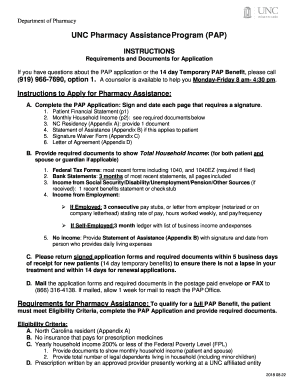
Photo: pharmaceutical assistance program enrollment form with medication and financial documents, via www.pdffiller.com
The envelope arrives in the mail — or maybe it's a card your doctor handed you at the end of your appointment. "Pay as little as $0 a month for your medication!" Or perhaps: "Eligible patients may receive their medication at no cost."
It feels like a lifeline. And sometimes it genuinely is. But pharmaceutical patient assistance programs are also among the most sophisticated customer retention tools ever designed. Understanding the difference between a real benefit and a gilded cage could save you thousands of dollars — or at minimum, keep you from making a financial decision you'll regret.
The Two Main Flavors of Pharma 'Help'
Before we get into the mechanics, it helps to understand what we're actually talking about. There are two distinct categories:
Co-pay Assistance Cards (also called co-pay cards or co-pay coupons): These are manufacturer-funded programs that cover your out-of-pocket copay for a brand-name drug, typically up to a set annual maximum. They're usually available to commercially insured patients — meaning people with private insurance, not Medicare or Medicaid.
Patient Assistance Programs (PAPs): These are income-based programs that provide free or heavily discounted medication to uninsured or underinsured patients who meet specific financial criteria. Major manufacturers like Pfizer, AstraZeneca, and Johnson & Johnson all operate these.
Both categories sound like pure upside. Neither is as straightforward as it appears.
Why Co-Pay Cards Are a Business Decision, Not Charity
Let's start with co-pay cards, because this is where the most consumers get burned.
Here's the core problem: co-pay cards exist almost exclusively for brand-name drugs that have generic alternatives — or that will have generic alternatives soon. A manufacturer doesn't need to bribe you to take a drug with no competition. They only need the card when a cheaper option exists.
By covering your out-of-pocket cost, the manufacturer accomplishes several things simultaneously:
-
Removes your price sensitivity. If your $400/month brand-name drug costs you $0 out of pocket, you have no financial reason to ask your doctor about the $15 generic. The manufacturer has effectively neutralized your most powerful incentive to switch.
-
Keeps your insurer paying full price. Your insurance still reimburses the drug at its full (often inflated) cost. The manufacturer loses a small amount on your copay subsidy but collects the full list price from your insurer. Net result: they come out ahead.
-
Locks in prescribing habits. The longer you stay on a drug, the less likely your doctor is to revisit whether it's still the best option. Brand loyalty gets baked in at the prescriber level, not just the patient level.
-
Blocks generic adoption at scale. When co-pay cards are widespread, generic manufacturers can't gain market share. The brand drug's volume stays high, which keeps list prices high, which keeps the rebate economy humming.
A 2023 analysis estimated that co-pay card programs cost the US healthcare system over $18 billion annually in excess spending — spending that mostly shows up in higher premiums for everyone.
The Accumulator Adjustment Problem
There's a newer wrinkle that's making co-pay cards actively dangerous for some patients: accumulator adjustment programs.
Many insurers now have accumulators built into their plans. What this means: any money paid by a third party (like a manufacturer co-pay card) does not count toward your deductible or out-of-pocket maximum. The card pays your copay all year. Then January hits, the card resets or expires, and suddenly you're responsible for the full cost — but you haven't accumulated any deductible credit. Patients have been blindsided by four-figure pharmacy bills in January for this exact reason.
If you're using a co-pay card, check your plan documents for the phrase "accumulator adjustment program" or "copay accumulator." If your plan has one, the card is providing less protection than you think.
When Patient Assistance Programs Are Actually Worth It
PAPs are a different story — and they deserve more credit than they typically get from cynical healthcare observers.
For patients who are genuinely uninsured or underinsured and have no access to cheaper alternatives, a PAP can be the difference between taking a medication and going without. That's a real and meaningful benefit. Nobody should dismiss that.
Here's when a PAP is likely worth pursuing:
- You have no insurance and don't qualify for Medicaid
- The medication has no generic equivalent and no biosimilar available
- Your income meets the program's eligibility criteria (most programs set the bar at 200–400% of the federal poverty level)
- You've already checked whether a generic or biosimilar is available and it isn't
The application process can be cumbersome — expect paperwork, income verification, and a wait time of several weeks. But for the right patient in the right situation, it's genuinely useful.
The Lock-In Trap: When PAPs Work Against You
Here's where PAPs become problematic: when a generic does exist, or when a biosimilar is approved, the PAP has no incentive to tell you. You're enrolled, you're receiving free medication, and you have no financial prompt to ask your doctor whether something cheaper is available.
A real scenario worth considering: a patient enrolled in a PAP for a brand-name biologic drug. A biosimilar — functionally equivalent, FDA-approved — gets approved. The PAP continues running. The patient never hears about it. Two years later, they're still on the brand drug, and the manufacturer is still benefiting from the volume.
The fix is simple but requires you to be proactive: set a calendar reminder every six months to ask your doctor or pharmacist whether a generic or biosimilar has become available for any medication you're taking through an assistance program.
How to Actually Calculate Your True Out-of-Pocket Cost
Before enrolling in any assistance program, run this quick calculation:
- Find the cash price of the drug at Cost Plus Drugs, GoodRx, or your local independent pharmacy.
- Find the generic equivalent (if one exists) and price that too.
- Compare the total annual cost of each option — including what you'd pay under your insurance plan with the co-pay card versus without it, accounting for accumulator adjustments.
- Factor in the January reset risk. If the card has an annual maximum, calculate what happens when it runs out or resets.
In many cases, a generic with no assistance program is cheaper than a brand drug with one. The math doesn't always favor the shiny card.
The Bottom Line
Pharmaceutical assistance programs aren't evil — but they aren't altruistic either. They're financial instruments designed to serve the manufacturer's interests first. Sometimes those interests align with yours. Sometimes they don't.
The only way to know which situation you're in is to do the math, ask the right questions, and resist the understandable temptation to stop thinking critically just because something is labeled "free." In drug pricing, free almost always has a price. The question is just who's paying it — and when.